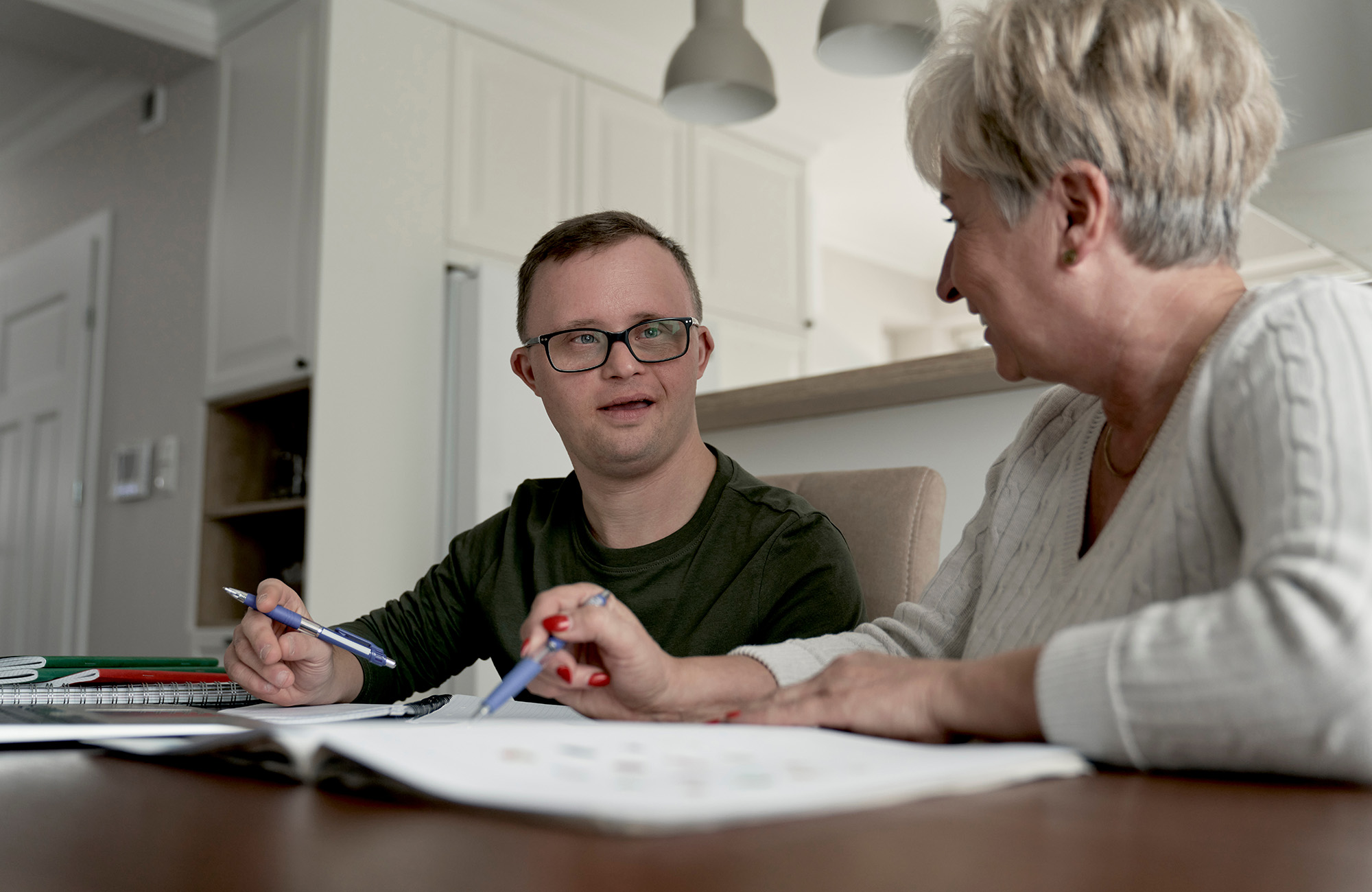

What About a “To-Be List”, Not a “To-Do List”
A phrase shared with me recently, while discussing whole person care, has stayed with me: “We don’t need a to-do list. We need a to-be list.” I stopped when I heard it because it captured something I had been feeling but had not yet named.
Most people working in the intellectual and developmental (IDD) space are already doing so much right. Care is thoughtful. Routines are structured. Needs are met. Families and staff show up every day with commitment and care. And still, challenges remain.
Sleep is inconsistent. Energy rises and falls. Behavior shifts in ways that feel difficult to predict. Health concerns linger. Teams try new strategies, new schedules and new interventions, yet something still feels incomplete.
In working with the design team for the Behavioral Support Services (BSS) Program, I am learning that what often gets missed is not one more service or one better intervention. It is the full picture.
Another moment that expanded my thinking came during last year’s Behavioral Support Mini-Conference when Dr. Pamela Moening spoke about sensory needs. I realized I had never fully considered how all the sensory pieces work together throughout someone’s day, and how deeply those experiences shape regulation, behavior, comfort and connection for people with IDD.
It changed the way I think about environments and support. Light, sound, texture, transitions, movement, noise, stimulation and calm. These are not background details. They influence how safe, settled and connected someone feels in their body and in the world around them.
Many are trained to approach care in parts. Medical. Behavioral. Nutritional. Social. Sensory. Each one matters, but they are often treated separately through a growing list of appointments, therapies, supports and interventions. This is a “to-do” list.
Whole person care asks something different. It shifts the question from “What else should we do?” to “Who is this person experiencing themselves to be throughout the day?” This is the heart of a “to-be” list.
This is where care that is focused on the whole person begins. Not as another burden layered onto an already stretched system, but as a different way of seeing, a “to-be” list instead of a “to-do” list.
What does it mean for someone to be rested? To feel regulated? To feel safe in their environment? To have moments of connection, movement, choice and calm built naturally into their day? These are not extras. They shape how a person experiences their body and the world around them.
At Laura Baker Services Association (LBSA), over the last 125 years, they have learned that health does not live in one place. It lives in all the small moments across the entire day. In the light and sound of a room. In the rhythm of transitions. In spending time outside. In how food is offered and shared. In opportunities to move, connect and make choices. Individually, these may seem like small things. Together, they influence how a person engages, rests, communicates and responds.
When those pieces align, you start to notice something different. A person settles more easily. They stay engaged longer. They sleep more consistently. They need less redirection because the day fits them better.
This is not about doing more. It’s about seeing how the pieces connect and how a small shift can change the feel of an entire day. That’s the difference. Once you see it, you start to notice it everywhere. The moments where the environment supports someone, or works against them. The times when a small choice changes the tone of an interaction. The way a few minutes outside has the potential to reset the rest of the day.
Most of these things are already within reach. The opportunity is bringing them together intentionally, rather than treating them as disconnected parts. This is one of the gifts of the BSS program. The ability to step back, look at the whole system surrounding a person and work alongside caregiving teams to notice what may be missing, misaligned or asking too much of someone. Their professionals partner with families and support teams to look beyond isolated behaviors or challenges and understand the full experience of the day.
LBSA asks different questions. Where does the person seem most at ease? What environments create stress? What rhythms support regulation? What small shifts create more stability, connection or calm?
This is where meaningful change happens, not through one perfect intervention, but through understanding how each part of a person’s experience shapes the whole.
At LBSA this is the focus; helping caregiving teams see the whole person, understand how the pieces interact and recognizing how small shifts influence health, behavior and quality of life.
Heather Durenberger
Consultant, Laura Baker Services Association
Heather is a nonprofit impact strategist, TEDxMinneapolis speaker and a member of the LBSA Behavioral Support Services Design Team. The program provides behavioral consultations and training to families and organizations that support people with IDD who are experiencing behavioral issues.